Why $20 Bands Beat $3,000 Gyms (Science Proves It)
Your gym buddy swears by his $3,000 home setup. You? You're eyeing that $20 resistance band pack on Amazon.
Guess what? Science says you might be the smarter one.
While everyone's been obsessing over iron plates and chrome dumbbells, something unexpected happened in 2024. Resistance band searches exploded—and stayed that way. We're talking about a sustained spike that caught even fitness industry analysts off guard. But here's the kicker: it's not just about convenience. Recent studies are flipping everything we thought we knew about "real" strength training.
So why are resistance bands having their moment now? And more importantly—should you jump on this stretchy bandwagon?
Resurgence in Resistance Bands: What's Driving It?
Picture this: You're scrolling through your feed, and suddenly everyone's doing bicep curls with what looks like giant rubber bands. Your first thought? "That can't be real training."
You're not alone. For decades, resistance bands lived in the shadows—relegated to physical therapy clinics and hotel room workouts. But 2024 changed everything.
The numbers don't lie. Market research shows the resistance band industry hit $1.66 billion in 2024, with growth projections that would make tech stocks jealous. But this isn't just another fitness fad. Three massive shifts are driving this surge:
The Affordability Crisis Hit Fitness Hard When a decent barbell set costs more than some people's rent, suddenly that $20 band system doesn't look so "beginner" anymore. You can get a full range of resistance levels for the price of a single dumbbell.
Space Became Premium Real Estate Home gyms exploded during the pandemic, but not everyone has a spare room. Resistance bands solve the "where do I put this?" problem that kills most home fitness dreams. Your entire gym fits in a shoebox.
The Functional Movement Revolution Here's where it gets interesting. As more people realized that lifting heavy in straight lines doesn't always translate to real-world strength, bands started looking pretty smart. They force your stabilizer muscles to work—something traditional weights often miss.
But before you toss your membership card, there's more to this story…
Evidence-Based Benefits for Strength and Rehab
Time for some truth-telling.
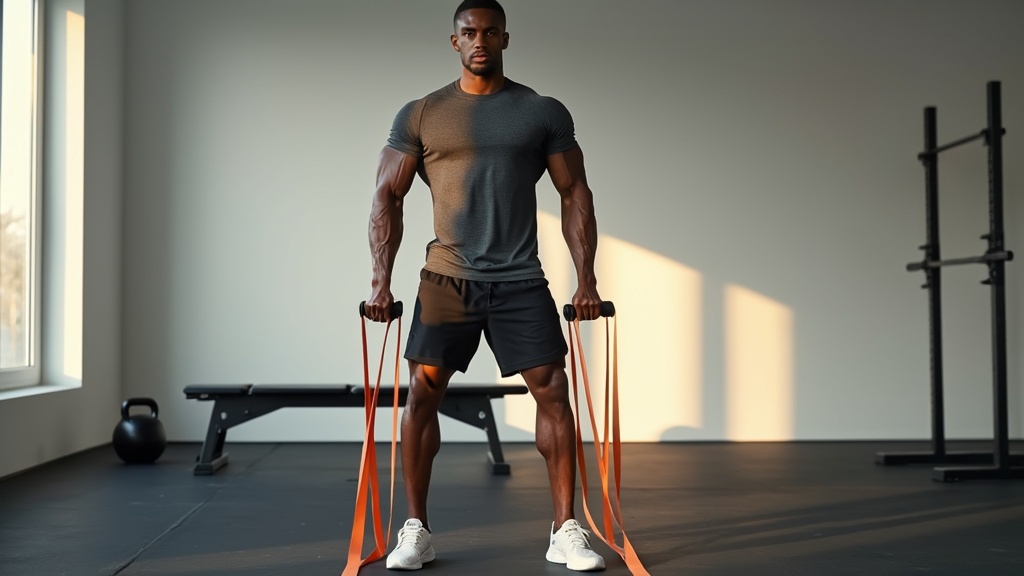
If you've been dismissing resistance bands as "fake weights," prepare to eat those words. A growing body of research is showing that elastic resistance can produce muscle activation and strength gains that rival traditional weights.
Here's what the studies actually say:
Muscle Activation: Surprisingly Close A controlled study published in the Journal of Human Kinetics found that resistance bands activated target muscles just as effectively as dumbbells in upper-body exercises. Sometimes more effectively. Why? Bands maintain tension throughout the entire range of motion, while weights rely on gravity—which creates "dead spots" where tension drops off.
Strength Gains: The Plot Thickens Research in the Journal of Sports Science and Medicine tracked subjects doing identical training programs with bands versus weights. The results? Nearly identical strength improvements over 8 weeks. The band group actually showed superior gains in functional strength tests.
Rehabilitation Gold Standard Physical therapists aren't just being nice when they hand you bands. The variable resistance curve—light at the beginning of movement, heavier at peak contraction—mirrors how your muscles naturally produce force. This makes bands incredibly effective for injury recovery and prevention.
The Stabilizer Muscle Secret Here's something your personal trainer might not tell you: bands activate stabilizer muscles more than weights. That slight "wobble" you feel? That's your deep core and joint-stabilizing muscles working overtime. It's not a bug—it's a feature.
But hold on. Before you start planning your band-only transformation, we need to address the elephant in the room…
Resistance Bands vs Free Weights: How They Compare
Let's cut through the hype and get real about where bands shine—and where they fall short.
Where Bands Dominate:
Progressive Overload Made Simple You know that plateau you hit with your 20-pound dumbbells? Bands solve this elegantly. Stretch them further, combine multiple bands, or change your angle. Boom—infinite progression without buying new equipment.
Travel-Friendly Training Try packing a squat rack for your business trip. Meanwhile, your entire resistance band gym weighs less than a hardcover book.
Joint-Friendly Force Curves Bands are gentler on joints because resistance increases gradually. No jarring impact, no sudden load changes. Your knees will thank you.
Explosive Movement Training Want to improve your athletic power? Bands excel at speed work because they don't have momentum. Unlike weights that can "carry" themselves through parts of the movement, bands resist equally at every speed.
Where Free Weights Fight Back:
Maximum Load Capacity Let's be honest—if you're benching 300 pounds, bands aren't replacing that anytime soon. There's a ceiling to band resistance that serious strength athletes will hit.
Predictable Resistance Weights are weights. 50 pounds is 50 pounds, whether you're fresh or fatigued. Band resistance varies with stretch, which can make precise programming trickier.
Compound Movement Mastery Try doing a proper deadlift with bands. Possible? Sure. Optimal? Debatable. Some movement patterns just work better with gravitational resistance.
Psychological Edge There's something primal about moving heavy iron that bands can't replicate. For some people, this mental component matters for motivation and effort.
The Verdict? It's not bands versus weights—it's bands with weights. The smartest approach uses both tools for different purposes.
But what does this look like in practice? Let me show you…
Sample Full-Body Band Workouts with Tips
Enough theory. Time to put rubber to muscle.
Here's a complete band workout that'll humble anyone who thinks elastic training is "easy mode":
The 20-Minute Band Burner
Upper Body Circuit (3 rounds):
- Band Pull-Aparts: 15 reps (rear delts/posture)
- Chest Press: 12 reps (anchor at chest height)
- Bent-Over Rows: 12 reps (step on band, pull to ribs)
- Overhead Press: 10 reps (stand on band center)
Lower Body Circuit (3 rounds):
- Squats: 15 reps (band under feet, over shoulders)
- Lateral Walks: 10 steps each way (band around ankles)
- Romanian Deadlifts: 12 reps (stand on band)
- Glute Bridges: 15 reps (band around knees)
Core Finisher:
- Pallof Press: 8 each side (anti-rotation)
- Wood Chops: 10 each side (diagonal core)
Pro Tips for Maximum Results:
Anchor Angles Matter High anchor = downward pull (great for lats). Low anchor = upward pull (perfect for rear delts). Chest-level = horizontal push/pull. Change angles to hit muscles differently.
Pre-Stretch for Power Start exercises with slight tension already in the band. This eliminates dead spots and maintains constant muscle activation.
Control the Negative Bands want to snap back. Fight them. The eccentric (lowering) phase is where muscle damage—and growth—happens.
Stack for Progression Can't add weight plates to a band. But you can add more bands. Start with one, progress to two or three for the same exercise.
Mind the Grip Bands can slip. Use handles when possible, wrap extra loops around your hands, or invest in door anchors. A slipping band kills momentum and can cause injury.
TL;DR: The Band Reality Check • Market research confirms: resistance bands had a sustained spike in 2024—driven by affordability and space constraints • Science backs it up: bands activate muscles comparably to weights and excel at functional strength • Best application: use bands for rehab, travel workouts, and as weight training supplements—not replacements • Pro move: combine band work with traditional training for the best of both worlds • Start smart: focus on form, anchor points, and progressive overload through band combinations
Here's the bottom line: resistance bands aren't trying to replace your gym. They're trying to make fitness accessible when your gym isn't.
Whether you're a road warrior who needs hotel room workouts, a budget-conscious beginner, or a veteran lifter looking to bulletproof your joints—bands have earned their place in the fitness toolkit.
The question isn't whether bands work. Science already answered that. The question is whether you're ready to stretch your definition of "real" training.
That $20 investment might just be the smartest fitness decision you make this year.